About the Book
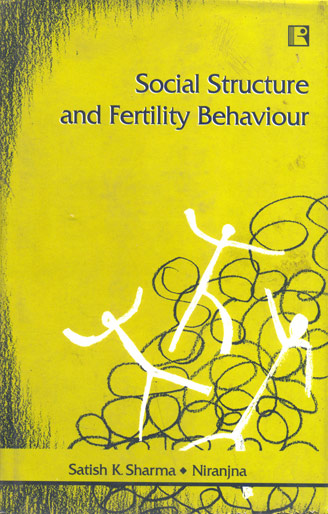
The perpetuation of organic life all over the universe takes place through the process of biological reproduction. The plants and the wild animals multiply and procreate under climatic and natural conditions respectively. Thus, their fertility remains unregulated. However, the gradual departure of human beings from their natural state produced more regulated, systematic and stable life. The human reproduction, though a natural and biological phenomenon, became social and largely controlled due to human socialisation. This directed way of procreation, even among some of the tribes, has become a patterned base of family and marriage institutions. In the contemporary times reproductive behaviour is now an institutionalised phenomenon. Since the social structure exerts differential constraints on different strata of people, the reproductive regulatory mechanisms result in heterogeneous patterns of fertility behaviour. This study throws light on the social-structural dynamics of human reproduction and the way of life of people of Kinnaur in the north-western Himalayas.
Contents
About the Author / Editor
Satish K. Sharma teaches sociology at the Himachal Pradesh University, Shimla. He has authored and edited several books and contributed scholarly articles to reputed journals and volumes.
Niranjna is associated with the Population Research Centre, Himachal Pradesh University, Shimla, where she has completed a couple of research projects in the area of population studies.