
Jaipur • New Delhi • Bengaluru • Guwahati • Kolkata
Yogendra Singh
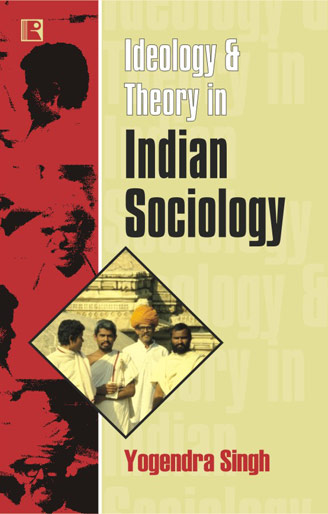
The book highlights how Indian sociology, despite its deeper linkages with the theoretical and methodological traditions of the West, has in the ideological and normative domains evolved successfully its own discourse. The volume also illustrates the nature of the inner epistemological tensions which continue to dominate the debates on how to ground the Indian sociology and its paradigms into the Indian philosophical traditions. This epistemic tension is also reflected in the manner that the crisis in the Western sociology’s philosophical moorings continue to cross-mirror in the Indian sociology as well. An instance in this context, which this volume has analyzed is that of the philosophy of ‘post-modernity’ and its challenge to the theories and methods of the Indian sociology. It is hoped that this volume would offer a perspective to the sociological studies of these problems.
1 Worldview of Sociology and the Challenge of Post-Modernity
2 The Concept of Man in Sociology
3 Ideology, Theory and Methods in Indian Sociology
4 Indian Sociology: Retrospect and Prospect
5 Functional Metaphor in Indian Sociology
6 The Relevance of Social Sciences in India
7 Challenges of Globalization, Identity and Economic Development: An Indian Perspective
Yogendra Singh is Professor Emeritus of Sociology at the Centre for the Study of Social Systems, Jawaharlal Nehru University, New Delhi. He has occupied several senior positions in the academic institutions in India and taught and lectured at the most campuses in the Western and Asian countries. He has done fieldwork in India and several South-Asian countries. His publications include “Modernization of Indian Tradition, Social Stratification and Change in India, ” “Indian Sociology: Social Conditioning and Emerging Concerns, Social Change in India: Crisis and Resilience” and “Culture Change in India: Identity and Globalization”.



Sukhadeo Thorat and Narender Kumar (Eds.)
Your cart is empty.
