About the Book
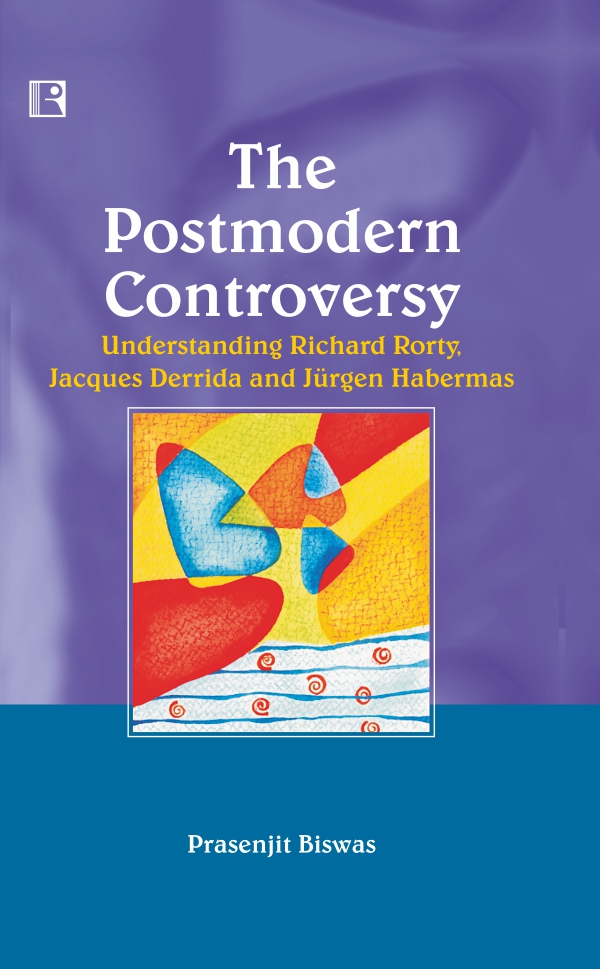
The book discusses the crucial issues of our times: instability of meanings and problems concerning our practice. What has been termed as postmodern moment in our contemporary life and literature is taken on with a spirit of appreciation and subversion. The triptych of postmodernity, namely, Rorty, Derrida and Habermas, is pitted face to face, sideways and in the crossroads, only to gather fragments of our failing wisdom, that of a blurring of philosophy and non-philosophy. The recurring controversy is: do they meet at the infinite or do they just cross each other out in a nihilistic surge to freedom and otherness? An abandonment of truth and justification by Rorty and Derrida, the pillars of modern cpistemology, in favour of radical undecidability of meanings and Habermas' recalling of norms and values that seek to establish truth and right in an unfinished journey towards a projected unity of fragmented worlds of reason force us to see us having two different goals: one that of openness and the other that of reason. Between Rorty and Derrida, the former in his liberal bourgeoisie ways uphold a culture of openness that does not contradict the prevailing human values and beliefs of North American community, while Derrida pleads for a deconstructive openness that reads against-against-the- grain of openness. Rorty stands for 'our' country, while Derrida stands for an international pluralism that sees the spectre of truth and signification in the liberal ideology of production of otherness. Habermas looks for a neutral ground of reason that would establish an inter-subjective agreement between people across continents through public use of reason as against terror and persuasion. The book brings out subtleties of their mutual positions and maintains an open-ended expectation of understanding each other without committing to fixed protocols of communication. In a sense, the book privileges a notion of 'freeplay' that can overcome closures of thought and imagination.
Contents
I Introduction: The Sources of Postmodern Thought
II Richard Rorty’s Poetics of Knowledge: A Critical Revision
III Play of Presence and Absence: Derrida’s Project of Deconstruction
IV Postmetaphysical Critique of Knowledge: Habermas’ Project of Modernity
V Critical Polemics – I: Habermas’ Critique of Rorty and Derrida: Response, Counter-critique and Counter-response
VI Critical Polemics – II: Postmodernism’s Inner Subversions: Rorty and Derrida in Crossing
VII The Postmodern Controversy: An Evaluation
About the Author / Editor
Prasenjit Biswas is Reader at the Department of Philosophy, Assam University, Silchar. He specializes in Social and Critical Theory and takes active interest in Subaltern and Globalization Studies. Currently, he is preparing a collection of essays on Investigations on Aporia: Derrida in Time.