About the Book
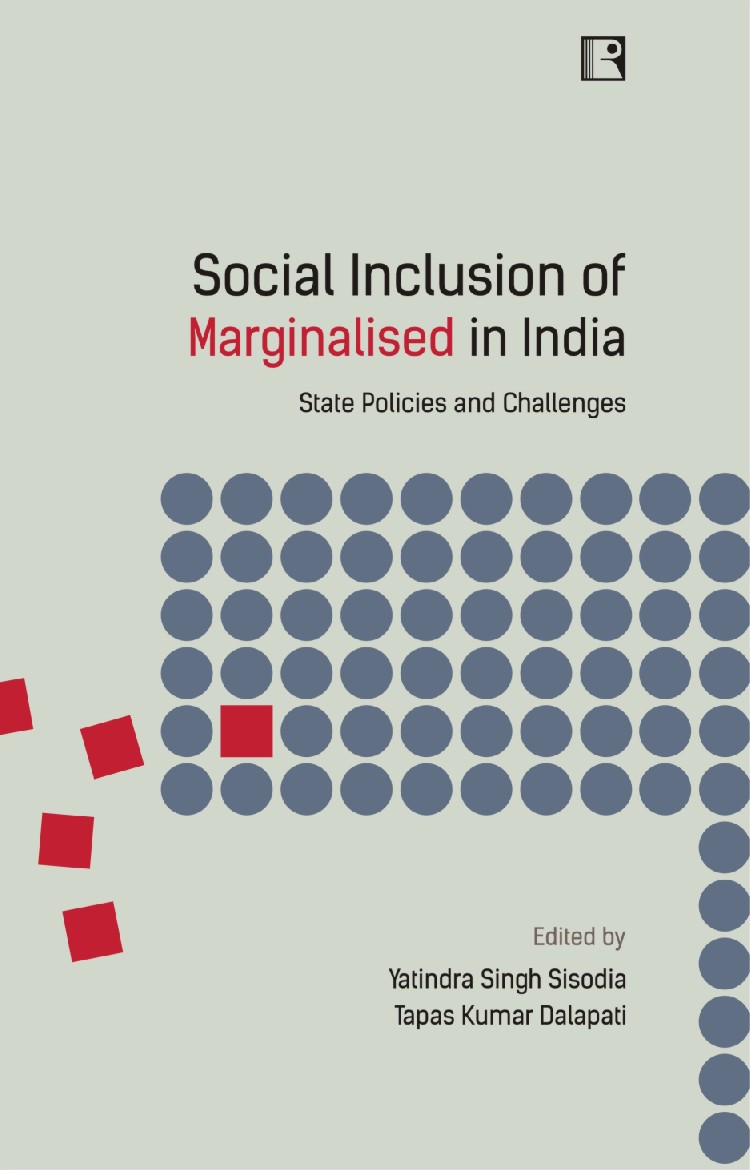
The process of social inclusion is enmeshed with the forms and nature of social exclusion in India. The ultimate goal of social inclusion process is to establish an inclusive society. An inclusive society balances social structures and abolishes hierarchies and ensures everyone’s participation in social, economic, and political life of the nation. Social Inclusion of Marginalised in India: State Policies and Challenges unravels the in-depth processes of social exclusion, processes of implementation of inclusive policies by the state and its impacts upon the marginalised sections in India. The book includes macro-level perspectives on socially inclusive policies and micro realties of social inclusion processes at the grassroots level.
Besides a crisp introduction by the editors, the book is thematically divided in five parts, viz. Perspectives on Social Exclusion/Inclusion of Marginalised; Policies for Health and Nutrition of Marginalised; Policies for Livelihood Generation of the Marginalised; Policies for Educational Development of Marginalised; and Policies for Political and Social Inclusion of Marginalised.
The book will be of immense interest to researchers, policy makers, planners, practitioners, academia, and all those interested in social development of marginalised sections in India.
Contents
1 Social Inclusion of Marginalised: An Introduction / Yatindra Singh Sisodia and Tapas Kumar Dalapati
Theme I: Perspectives on Social Exclusion/Inclusion of the Marginalised
2 Regional, Residence, Social Class, and Gender Inequalities in Child Mortality: A Case of Madhya Pradesh / Aalok Ranjan Chaurasia
3 Non-implementation of PESA Provisions in Madhya Pradesh / Rahul Banerjee
Theme II: Policies for Health and Nutrition of the Marginalised
4 Delivery of Nutritional and Healthcare Services through ICDS: How Does Caste Matter? / G.C. Pal
5 Mid Day Meal Scheme Contributing in Achieving Goal of Primary Education for Children of Disadvantaged Groups: A Ground-Level Reality Check in Rajasthan / Deepak Kumar Yogi
6 Gynaecological Health of Poor Urban Women in Indore / Subhadra Khaperde
Theme III: Policies for Livelihood Generation of the Marginalised
7 Incidence and Correlates of Chronic Poverty in Central Tribal Belt of India / D.C. Sah
8 Financial Inclusion and Economic Empowerment: A Study of Caste Dynamics / Neeta Tapan
9 Impact of Livelihood Generation Programme of Micro Project on Particularly Vulnerable Tribal Groups in Odisha / Minaketan Behera
10 Efficacy of Agricultural Development Programmes in the Tribal Areas of Andhra Pradesh / Brajaraja Mishra
Theme IV: Policies for Educational Development of the Marginalised
11 Assessing Elementary Education in Odisha: How Inclusive is It? / Sanjay Kumar
12 Trend, Pattern, and Academic Performance in Higher Education: Focus on Scheduled Tribe Students in Odisha / Anjali Dash
13 Scheduled Caste Students in Higher Education and the National Fellowship: Educational Inclusion, Socio-Economic and Political Mobility / Dhaneswar Bhoi
Theme V: Policies for Political and Social Inclusion of the Marginalised
14 Political Representation of Scheduled Castes in Panchayati Raj: An Experience from Maharashtra / Jitendra G. Wasnik
15 Critical Review of Efficacy of Government Programmes on the Socio-Economic and Political Inclusion of Katkari Tribes in Maharashtra / Supriya David
16 Bharias and their Economic Development: A Retrospect to Efficacy of State Interventions / Sunil Kumar Yadav
17 73rd Constitutional Amendment and Political Inclusion of Tribes in Central India: An Appraisal / Neelu Rawat
About the Author / Editor
Yatindra Singh Sisodia is Director, M.P. Institute of Social Science Research, Ujjain (An ICSSR Institute). His areas of research interest are democracy, decentralised governance, electoral politics, tribal issues and developmental issues. He has been conferred with Professor G. Ram Reddy Social Scientist Award (2017). He has authored/edited 18 books, including Strategies for Human Development and People’s Participation in Rural India (2020), How India Votes (2019), and Two Decades of Panchayat Raj in India (2017). He is the Editor of Madhya Pradesh Journal of Social Sciences and Madhya Pradesh Samajik Vigyan Anushandhan Journal. He has completed several government funded research projects for various central ministries, state ministries and organisations like ICSSR, Planning Commission and ISRO.
Tapas Kumar Dalapati is Assistant Professor at M.P. Institute of Social Science Research, Ujjain (An ICSSR Institute). He has been undertaking research work on tribal land alienation, tribal movements, livelihood transition among tribal, agrarian labour relations, and the changing forms of Hindu marriages. He has authored and edited six books and published over 33 research/ policy papers, mostly related to marginalised sections in India. He is also the Associate Editor of Madhya Pradesh Journal of Social Sciences. He has undertaken research projects for the Planning Commission, UNDP, Ministry of Rural Development, Madhya Pradesh Backward Classes Commission, and the ICSSR.