
Jaipur • New Delhi • Bengaluru • Guwahati • Kolkata
Christina Hughes
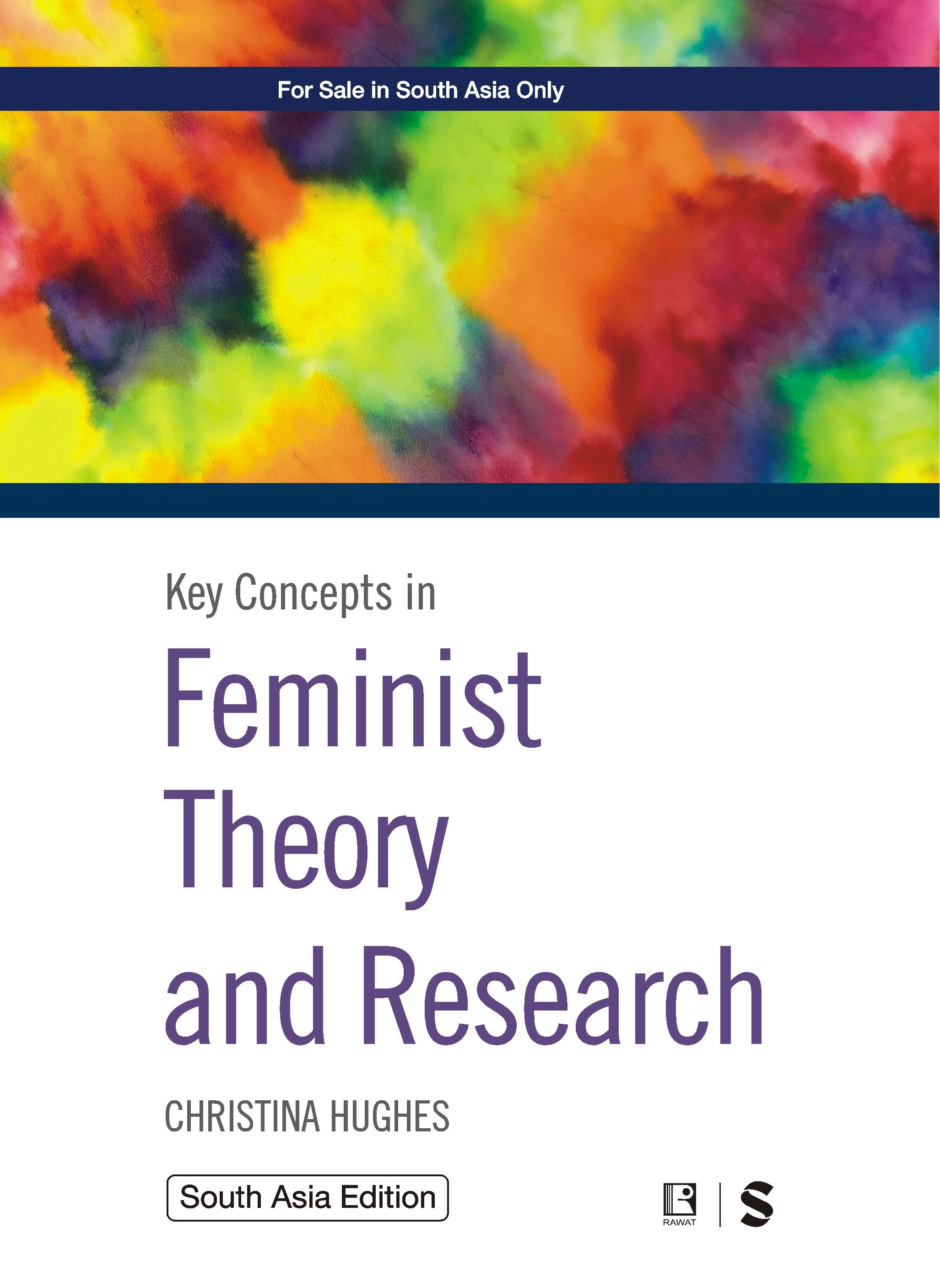
This original and engaging text explores the core concepts in feminist theory.
This up-to-date text addresses the implications of postmodernism and post-structuralism for feminist theorizing. It identifies the challenges of this through the development of 'conceptual literacy'. Introducing conceptual literacy as a pedagogic task, this text facilitates students' understanding of, for example:
- The range and lack of fixity of conceptualizations and meanings of key terms;
- The significance of theoretical framework for conceptualization of key terms;
- The changing nature of language and the reframing of key terms in research (eg the recent shift from equality to social justice);
The text explores these issues through six key concepts in feminist theorizing: equality; difference; choice; care; time; and experience. Each chapter considers the varied ways in which these terms have been conceptualised and the feminist debates about these concepts. Each chapter includes case studies to illustrate the application of these concepts in feminist empirical research, and provides a guide to further reading.
This text will be an invaluable tool for students taking courses in feminist theory and research methods, and students across the social sciences who are taking courses concerned with issues of gender.
Introduction : Not Talking about the Same Thing: Introducing Conceptual Literacy
Concepts : Meanings, Games and Contests
Equality
Difference
Choice
Care
Time
Experience
Developing Conceptual Literacy
Christina Hughes University of Warwick, UK I am a Professor of Women and Gender and, currently, Chair
of the Faculty of Social Sciences, University of Warwick. Previously I have
taught and undertaken research at the University of Warwick in the Centre for
Education, Development, Appraisal and Research (CEDAR), the Department of
Applied Social Studies and the Department of Continuing Education. I have also
worked for the Open University. My research interests have always been strongly feminist.
This has led to work on stepfamily life, lifelong learning and higher education
and more recently with artisan entrepreneurs. I try to bring a strong
conceptual frame to my work and I have a number of publications that have been
concerned with social capital, equality, envy and pleasure. My work with
artisan entrepreneurs is leading to several streams of analysis. Through the
notion of Salivary Identities this includes an exploration of the intra-actions
between neuroscientific understandings of pleasure and the culture of jewellery
designer making. Issues of distinction, disidentification and economic value
are also of concern in further work I am developing. My research interests have
also always been focussed on methodological concerns. My most recent work here
has been on feminist quantitative methodologies (see Feminism Counts:
Quantitative Methods and Researching Gender (2011) Oxford, Routledge (Edited
with Rachel Cohen). I have also published on dissemination of qualitative
research. I have been particularly interested in what, and who, gets heard and
why. Again, I bring a feminist and political lens to this work as I seek to
promote an 'informed practice' in the field of dissemination. Such informed
practice takes account of the emotional realm of dissemination, the ethics of
representation; and the challenge of 'post' (postmodernism, postcolonialism,
poststructuralism) epistemological thought. I also continue to work with my
colleagues Loraine Blaxter and Malcolm Tight. We have just completed the fourth
edition of the highly successful text How to Research (2010) Buckingham, Open
University Press.




Your cart is empty.