About the Book
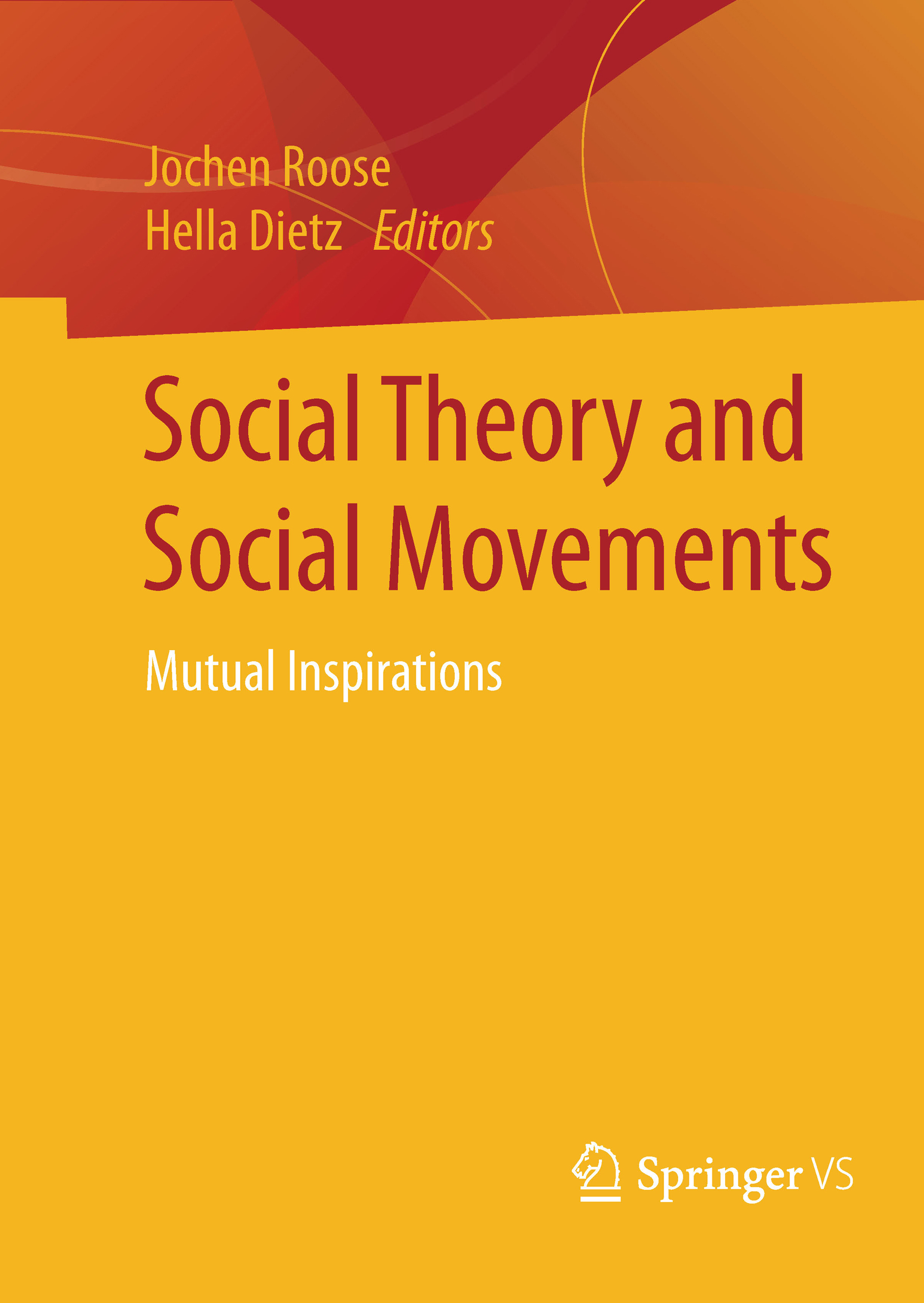
Social movements are not only a potential challenge to societies, they also challenge social theory. This volume looks at social movements and social movement research through the lens of different social theories. What can social movement studies learn from these theories? And: What can these theories learn from the analysis of social movements? From this double vantage point, the book discusses the theories of Michel Foucault, Pierre Bourdieu, Niklas Luhmann, Jeffrey Alexander, and Judith Butler, as well as rational choice theory, relational sociology, and organizational neo-institutionalism.
Contents
1. Paths of Innovation in Social Movement Research Theory / Jochen Roose
2. Discourse, Power, and Governmentality. Social Movement Research with and beyond Foucault / Britta Baumgarten and Peter Ullrich
3. Social Movements and the Rationality of Choice / Annette Schnabel
4. Bourdieu Meets Social Movement / Lars Schmitt
5. Social Movements and Sociological Systems Theory / Isabel Kusche
6. Inequality, Inclusion, and Protest. Jeffrey Alexander's Theory of the Civil Sphere / Thomas Kern
7. Social Movements and Neo-Institutionalism: A Fruitful Merger? / Jochen Roose
8. Judith Butler and the Politics of Protest / Dorothea Reinmuth
9. Networks, Interaction, and Conflict: A Relational Sociology of Social Movements and Protest / Nick Crossley
About the Author / Editor
Jochen Roose is professor for social sciences at the Willy Brandt Zentrum of the University of Wroclaw, Poland.
Hella Dietz works at the Institute for Sociology at the Georg-August University in Gottingen, Germany.