
Jaipur • New Delhi • Bengaluru • Guwahati • Kolkata
Bruce A. Thyer
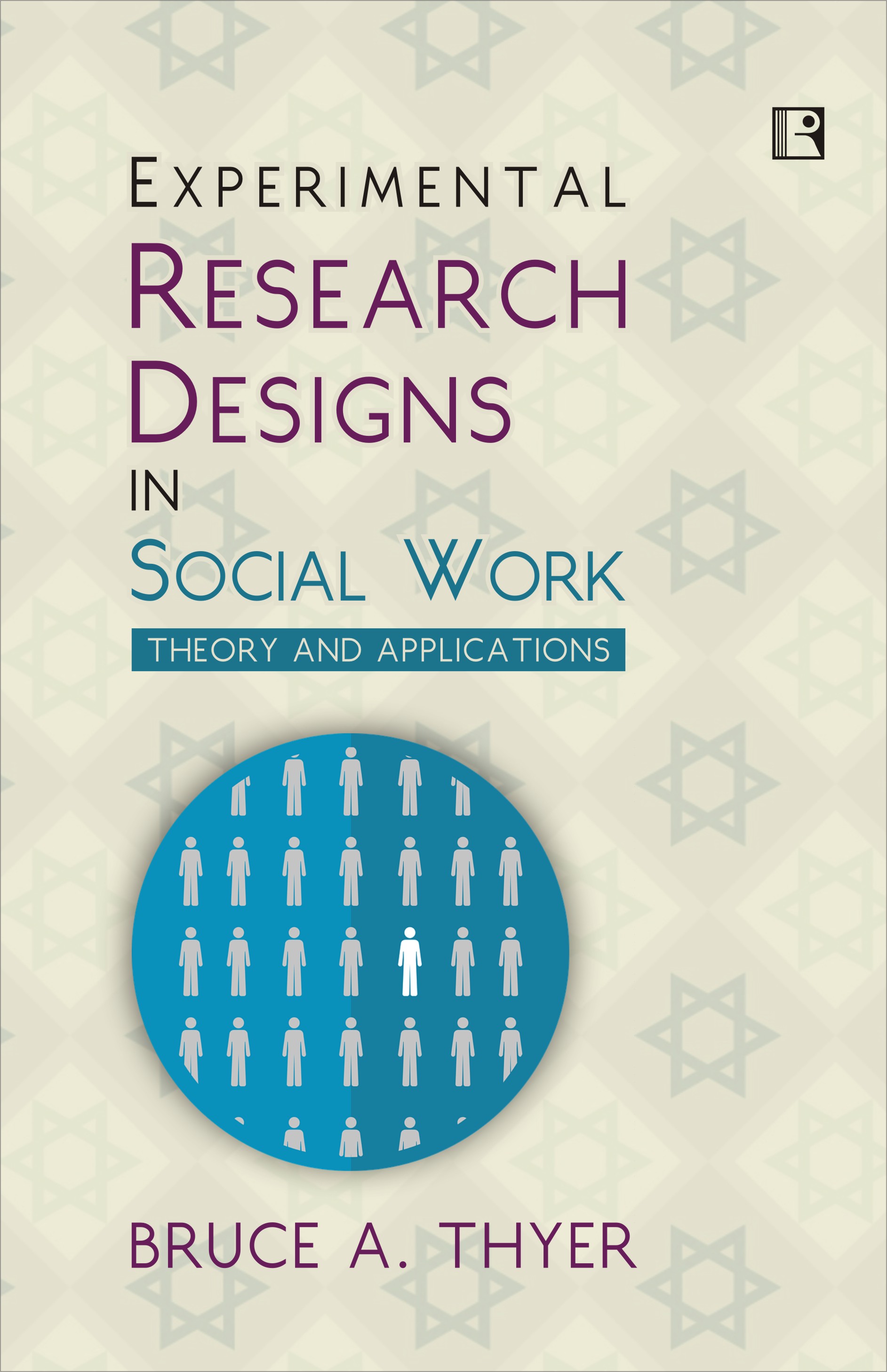
Experimental research is of great value to social work.
Well-designed studies help social workers understand which approaches are most
effective, with implications for both practice with individual clients and
social policy more broadly. Many social work practitioners conduct studies that
randomly assign clients to specific interventions and various control groups in
order to assess policy outcomes. However, social work programs often do not
teach experimental methods. Critics continue to assert that true experiments
are impractical, unethical, or simply too blunt a tool to evaluate the effects
of social work practices and policies.
This book presents a comprehensive overview of the theory and
practice of experimental research in the field of social work. Bruce A. Thyer
describes the logic and design of experimental methods, helping readers
understand the basics and then exploring increasingly complex and sophisticated
research. He illustrates key principles through examples of how social workers
have evaluated real-world practice approaches. The book considers recruitment
and representation of marginalized groups, the ethical issues involved in the
design and conduct of experiments, and how social work researchers can ensure
that all participants in an experimental study benefit from effective care. An
appendix contains a chronological listing of published studies authored by
social workers who conducted experimental research. Accessible to social work
undergraduate, graduate, and doctoral students alike and valuable for
professionals from clinical workers to policy analysts, this book demonstrates
the utility of experimental research across the entire spectrum of social work
practice.
Why Does Social Work Need Experimental
Designs?
What Are Experiments?
The Philosophy of the Science of Experimental
Designs
The Purpose of Experimental Designs
Posttest-Only Experimental Designs
Pretest–Posttest Experimental Designs
Refinements in Experimental Designs
Recruiting Participants from Diverse and
Underrepresented Groups
Alternatives to Group-Randomized Designs
for Making Causal Inferences
Ethical Considerations for the Use of Experimental
Designs
Bruce A.
Thyer is a distinguished research professor and former dean at the
College of Social Work at Florida State University as well as an extraordinary
professor with the Optentia Research Unit, North-West University, South Africa.
He is the editor of the journal Research on Social Work Practice and coeditor
of the Child and Adolescent Social Work Journal.



Rosalie Ambrosino, Joseph Heffernan, Guy Shuttlesworth & Robert Ambrosino

Your cart is empty.