About the Book
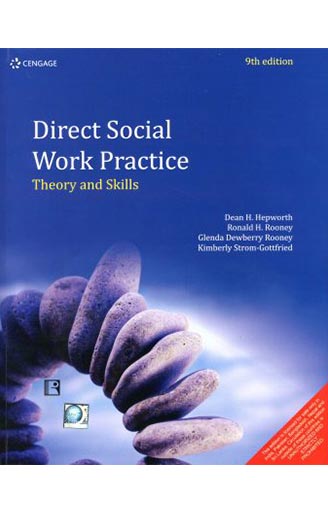
The book has four parts. Part 1 introduces the reader to the social work profession and direct practice and provides an overview of the helping process, including core competencies, the role of evidence-based practice, the domains and roles of social work, and the elements of ethical practice.
Part 2 presents the beginning phase of the helping process and each chapter includes examples from the videotapes developed for the text. It addresses relationship-building skills, strategies for providing direction and focus in interviews, and avoiding common communication errors. Subsequent chapters in this section address problem and strengths explorations; theories and techniques for individual, family, and group assessment; and the processes for goal setting.
Part 3 presents the middle, or goal attainment, phase of the helping process. It describes change-oriented strategies, including updated material on task-centered, crises intervention, cognitive restructuring, solution-focused approaches to practice and case management, large-systems change, advocacy, family practice, and groupwork. Readers learn advanced communication and intervention techniques and common worker and client barriers to change.
Part 4 deals with the final phase of the helping process incorporating materials on evaluating and terminating social work relationships in an array of circumstances.
Contents
Part 1: Introduction to Direct Social Work Practice
1. Social Work Challenges
2. The Domain, Philosophy, and Roles of Direct Practice
3. Helping Process Overview
4. The Cardinal Social Work Values
Part 2: Planning, Exploring, and Assessing
5. Empathy and Authenticity: The Building Blocks of Communications
6. The Skills of Verbal Following, Exploring, and Focusing
7. Avoiding Counterproductive Communication Patterns
8. Assessment: Problems and Strengths
9. Intrapersonal, Interpersonal and Environmental Factors in Assessment
10. Assessment: Family Functioning in Diverse Family and Cultural Contexts
11. Social Work Groups: Formation and Assessment
12. Goal Development and Contract Formulation
Part 3: The Change-Oriented Phase
13. Change-Oriented Strategies: Planning and Implementation
14. Intervention Strategies: Developing Resources, Organizing, Planning, and Advocacy
15. Improving Relationships and Family Functioning
16. Social Work Group Interventions
17. Confrontation, Interpretation, and Additive Empathy
18. The Management of Barriers to Change
Part 4: The Final Phase
19. Evaluation and Termination
About the Author / Editor
Dean H. Hepworth, Professor Emeritus, University of Utah and Arizona State University
Ronald H. Rooney, University of Minnesota
Glenda Dewberry Rooney, Augsburg College
Kimberly Strom-Gottfried, University of North Carolina at Chapel Hill