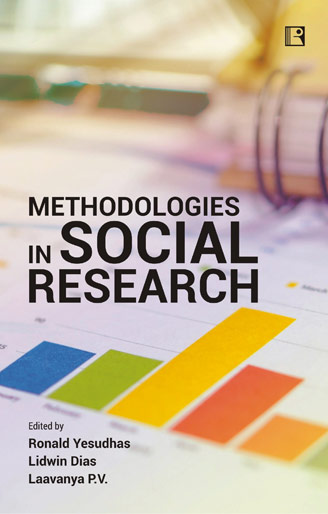
About the Book
The plural word “methodologies” instead of “methodology” creates interest (or probably confusion) in the reader and makes him/her wonder why the plural term is chosen as a title. Nevertheless, there is a logic to the title. The book takes the point of view that there are several methodologies in social research about which a novice researcher should be aware.
It presents the dominant approaches, namely the experimental and survey research designs in the beginning, followed by the whole range of alternative approaches which are seldom taught in classrooms. One aspect the book reiterates is that the “research question should determine the choice of the methodology and not the otherwise”. For example, if the question is related to the cultural aspects of a certain community living in a tribal pada, then the appropriate methodology, namely ethnography or ethnomethodology could be employed. In popular research methodology textbooks, there is a demarcation of the research methodologies as quantitative and qualitative.
This book takes a different path and provides the reader an overview of a range of methodologies right from experimental research to ethnomethodology. The objective of this exercise is to help the readers appreciate the strengths of various methodologies and to encourage young research scholars to become familiar with the methods and nuances of conducting research.
Contents
1. Experimental Research
2. Survey Research
3. Case Study Research
4. Historical Research
5. Oral History
6. Grounded Theory
7. Feminist Standpoint Epistemology
8. Participatory Research
9. Ethnography
8. Ethnomethodology
9. Mixed Methods Research
10. Ethics in Social Research
About the Author / Editor
Ronald Yesudhas obtained his PhD from the Tata Institute of Social Sciences. He is currently teaching at Nirmala Niketan College of Social Work, Mumbai. Dr Ronald is interested in fields such as Management of Non Profit Organisations, Social Entrepreneurship, Social Work Education, and Research Methodology.
Lidwin Dias received her PhD from the University of Mumbai. She has been teaching at Nirmala Niketan College of Social Work, Mumbai for the past 16 years and is currently the Principal (I/C). Dr Lidwin is also the Director of the Extension Centre of the College. Her research and teaching interests include Disability Studies, Social Welfare Administration, Lifelong Learning/ Adult Education, and Training of Para Social Workers.
Laavanya P.V. received her PhD from the Tata Institute of Social Sciences. She is currently a Researcher, Trainer and Social Development Consultant specialising in the academic fields of Adolescents Mental Health, Social Gerontology, Gender Studies, and Phenomenological Research.