About the Book
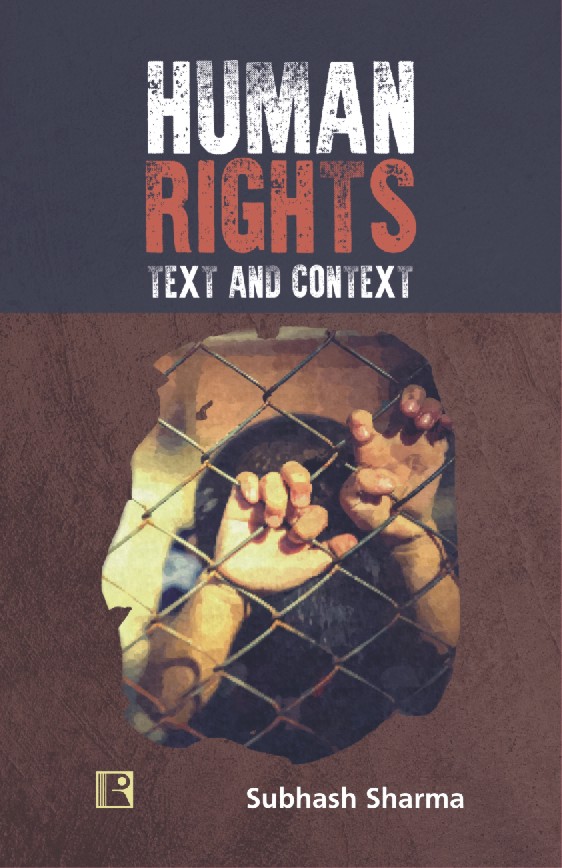
Human Rights: Text and Context deals with various theoretical perspectives on human rights (globalists versus anti-globalists, unilateralists versus multi-lateralists, and market ideology versus religious fundamentalists) as well as different dimensions of human rights, both global and local. An attempt has also been made to demystify the myth that human rights originated in modern Western Europe. It has been shown here that there has been the evolution of human rights in many developing countries in ancient period itself; for example, in Babylonia, Hammurabi Code was declared regarding justice and punishment way back in 1700 BCE. Similarly, in ancient India too, various texts and practices of governance fully endorsed human rights of common people thousands of years back.
In addition, this book also deals with efforts of United Nations like the declaration of Millennium Development Goals in 2000 as well as declaration of Sustainable Development Goals in 2015 for the protection of human rights of all the human beings. This book contains eleven chapters ranging from the evolution and theoretical perspectives on human rights to child labour, dalits’ exclusion, terrorism and good governance. Looking into the text and context, the book offers an in-depth analysis of the issues for ensuring a right to life with dignity, liberty and sustainable development so that the spirit of Universal Declaration of Human Rights may be ensured globally, nationally and locally. It is expected that this book will provide the food for thought to the academia in particular and the public at large in general.
Contents
Introduction
Part I – Human Rights: Evolution, Perspectives and Context
• Evolution of Human Rights: A Global Historical Perspective
• Perspectives on Human Rights
• Dynamics of Human Rights in India
Part II – Human Rights and Child Labour
• Conceptual and Legal Aspects of Child Labour: A Critical Appraisal
• Trends, Causes and Consequences of Child Labour in India
• Dynamics of Child Labour in India: Problems and Prospects
• Domestic Child Labour: Myth and Reality
Part III – Human Rights and Exclusion of Dalits
• Inclusion of Dalits: Towards ‘Development with Identity’
Part IV – Human Rights and Terrorism
• Networks, Roots and Eradication of Terrorism
Part V – Human Rights and Governance
• Governance and Ethics in India
• Corruption: Causes, Consequences and Eradication
About the Author / Editor
Subhash Sharma joined Indian Administrative Service (IAS) in 1984 and has held important positions in both the Government of India and the Government of Bihar. Presently, he is holding a high position of Chief Secretary Rank in Government of Bihar, Patna.
He did his M.A. and M.Phil. in Sociology at the Jawaharlal Nehru University (JNU), New Delhi and Ph.D. from Patna University, Patna. He also obtained M.A. degree in Development Administration and Management from the University of Manchester, UK.
Dr Sharma is a prolific writer and has widely published (both in English and Hindi) on ecology, agrarian change, development, education, human rights, gender, child labour, etc. His published works include Sociology of Literature, Development and Its Discontents, Why People Protest, Bharat mein Manavadhikar, Bharatiya Mahilaon ki Dasha, Shiksha ka Samajshastra, Vikas ka Samajshastra and Paryavaran aur Vikas. His research papers have been published in different journals of national and international repute. His literary/creative works have been translated into English and many Indian languages. His contribution has been acknowledged by way of several awards and recognitions, including one award given by National Human Rights Commission, New Delhi.