Jaipur • New Delhi • Bengaluru • Guwahati • Kolkata
William L. Richter (Ed.)
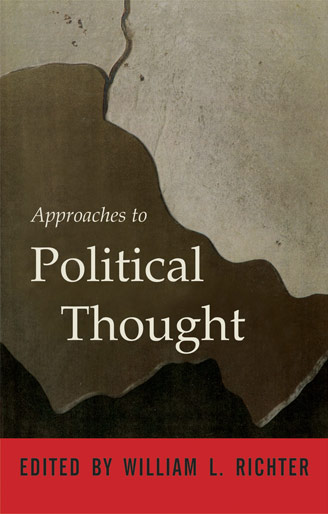
(1) Why study the political writings and ideas of Plato, Machiavelli, and other long-dead writers?
(2) Who among the writers, and which of their works, are worth studying?
(3) How should they be studied?
The book then explores ten contemporary approaches to understanding political thought and the diverse answers to these questions. The approaches covered include those of Leo Strauss, Hannah Arendt, Eric Voegelin, Sheldon Wolin, the Cambridge School (Quentin Skinner and J.G.A. Pocock), psychobiography, critical theory of the Frankfurt School (Herbert Marcuse and Jürgen Habermas), hermeneutics (Paul Ricoeur and Hans-Georg Gadamer), Michel Foucault, and feminist criticism (Susan Moller Okin and Jean Elshtain). Each chapter includes an introductory essay and edited selections that illustrate or discuss that approach, and concludes with discussion questions and suggestions for further exploration, including books, articles, and websites. This exploration of contending contemporary approaches to political thought touches upon ongoing methodological and philosophical issues that are relevant to several academic disciplines, including political science, history, philosophy, and psychology.
WILLIAM L. RICHTER is professor emeritus of political science at Kansas State University. His publications include “Combating Corruption, Encouraging Ethics”, coedited with Frances Burke, and numerous book chapters and articles on South Asian political and security issues.


Richard Sisson and Stanley Wolpert (eds)
Your cart is empty.