
Jaipur • New Delhi • Bengaluru • Guwahati • Kolkata
RAJNATH
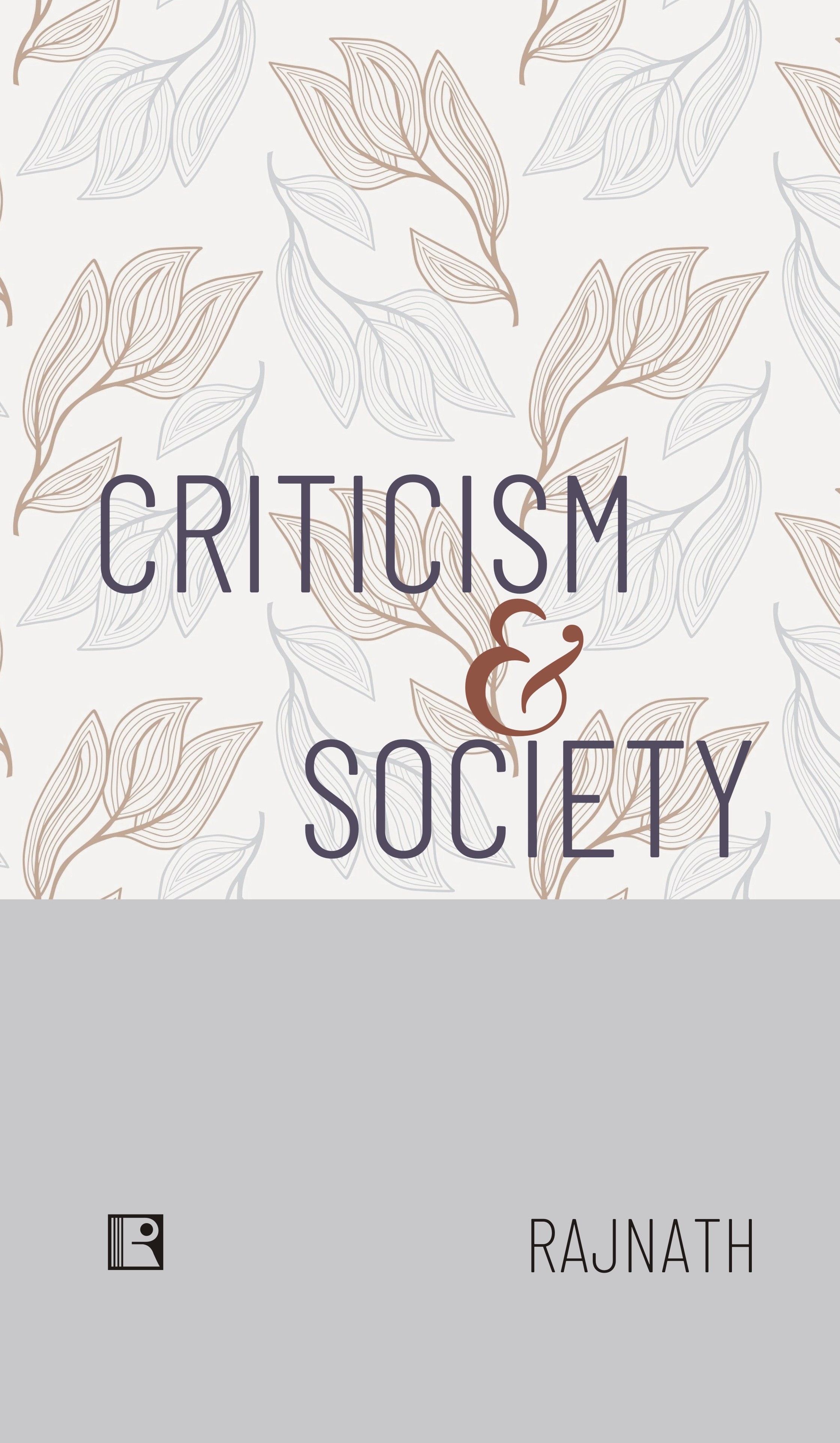
This collection of essays highlights, directly or indirectly, the social concern of criticism. Each essay is independent yet related to the other essays in the volume. For example, the very first essay foregrounds the question of morality, identifying religion and literature as its main sources. The question of morality is, however, present in all the other essays. The intellectual is defined in terms of the honesty of thought and literary criticism is correlated to culture, which is premised on morality. The collision of cultures in the two critical movements rests on the question of morality. The two major poems discussed by the canonical modern poet T.S. Eliot place morality at the centre of the life they depict. The colonial encounter was essentially a cultural encounter that cannot be dissociated from morality. F.R. Leavis is known for raising the question of morality, and so is T.S. Eliot. The interface of ‘criticism’ and ‘society’ is the crux of the book. Each essay will be found exceedingly useful and enlightening by readers, whether they are students, teachers, scholars, or critics.
PART I
1 Religion, Literature and Society: The Use of Reason and the Limits of the Aesthetic Dimension
2 Notes Towards a Definition of the Intellectual
PART II
3 Literary Criticism in India
4 The Collision of Cultures in Postcolonial Theory and Critical Race Theory
PART III
5 The Structure and Meaning of The Waste Land
6 The Theme and Structure of Four Quartets
PART IV
7 Indian Response to Colonialism during the Renaissance: The Example of Raja Rammohun Roy
8 Colonial Encounter and the Development of Literary Forms in India
Rajnath, former Professor of English at the University of
Allahabad, holds a Ph.D. from Leeds University. He was a post-doctoral fellow
and Adjunct Professor of English at the University of New York at Buffalo. A
recipient of the British Council Scholarship, ACLS Senior Fulbright, and
American Research Fellowship, he has specialized in criticism and theory. His
publications include Essays in Criticism, T.S. Eliot’s Theory of Poetry,
Critical Speculations, Criticism and Culture, The Identity of Literature,
Postcolonial Criticism and Theory, and essays contributed to both Indian and
foreign journals. He was the founding editor of the international Journal of
Literary Criticism from 1984 to 2008. He received the M.Q. Khan Award for
Excellence in Criticism and Research and the C.D. Narasimhaiah Memorial Award
for his contribution to English studies.




Kriemild Saunders (ed)
Ajay K. Chaubey and Ashvin I. Devasundaram (eds)
Your cart is empty.