About the Book
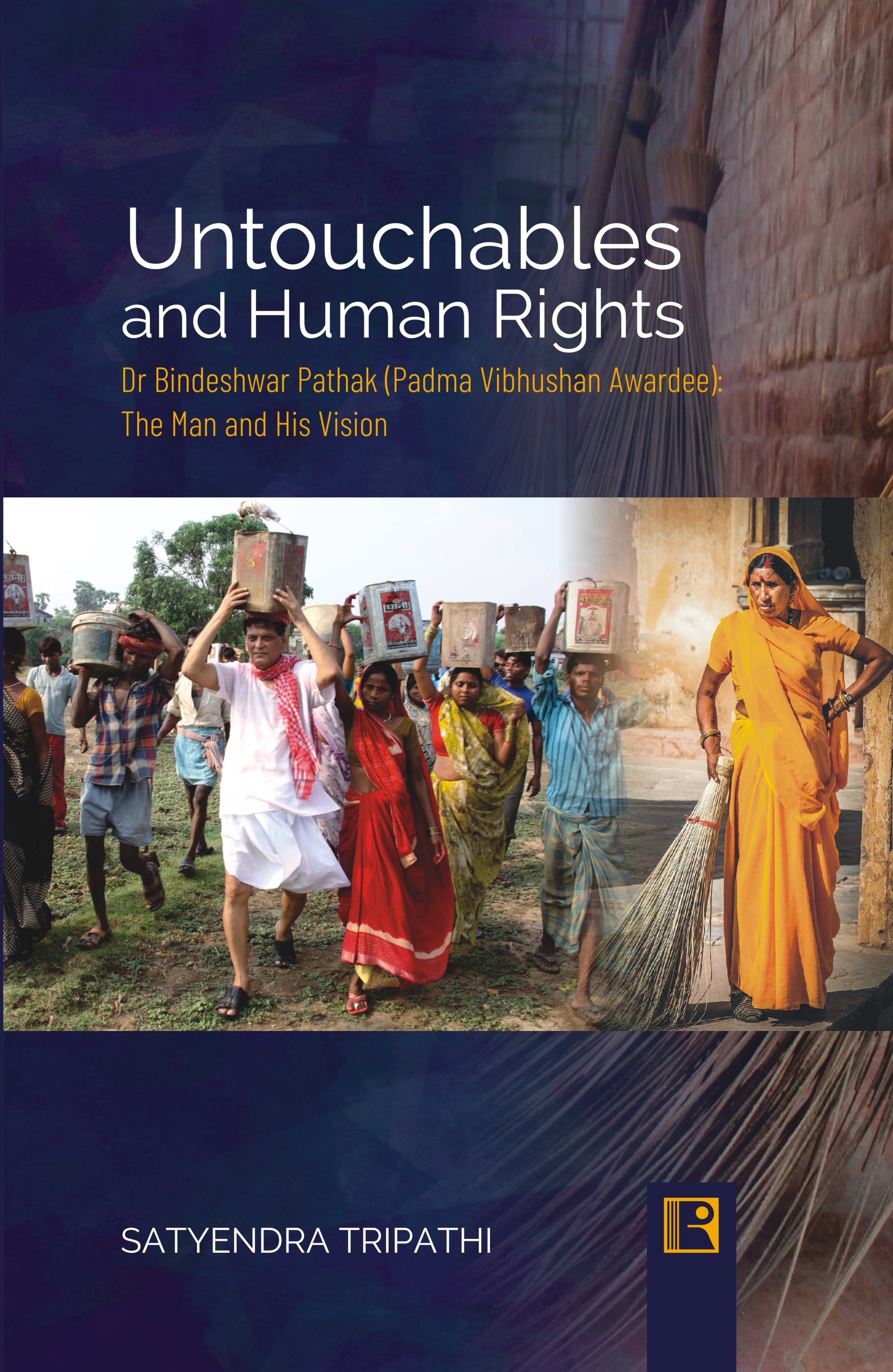
Even in the 21st century, over one billion people around the world still lack access to safe drinking water, and nearly three billion lack adequate sanitation. This situation is not only humiliating but morally unjust. It is high time that sanitation is recognized as a fundamental human right. By recognizing water, hygiene, and sanitation as basic human rights, the quality of life can improve, and poverty can be significantly reduced.
In India, the Sulabh International Social Service Organisation, a non-governmental organization, took on the task of restoring human rights and dignity to scavengers by freeing them from the dehumanizing practice of manually cleaning and carrying human excreta on their heads. Today, five decades later, the organization has become one of the most respected NGOs in the sanitation sector, both nationally and internationally. Dr. Bindeshwar Pathak, the founder of the Sulabh movement, is a true crusader of the post-independence era, dedicated to liberating scavengers and rehabilitating them.
For centuries, a section of society was ostracized, not just because of their caste, but due to the “unclean” nature of their work. Dr. Pathak believed that this man-made social inequality, rooted in a flawed social structure, convention, religious orthodoxy, and prejudice, could be transformed—without conflict or war. This book tells the story of a social reformer who is striving to make this change a reality. His life and mission, placed in perspective, offer a refreshing and insightful vision for these extraordinary times.
Contents
Preface
Acknowledgement
1 Leadership Makes the Difference
2 Environmental Sanitation
3 Mathematics of Technology
4 Manual Scavenging in India
5 Grammar of Dalit Movement
6 Protection of Human Rights
7 Sulabh Sanitation and Social Reforms
8 Sulabh Philosophy: A Synthesis of Gandhism and Democracy
9 Vision–2000 Plus
Messiah of Untouchables: Snapshots of Impact
Bibliography
Index
About the Author / Editor
Satyendra Tripathi is trained as a social scientist in India, The Netherlands, the United Kingdom, and the USA. He was formerly a Professor on the SBI Chair and Director of the Centre for Integrated Rural Development Programme, as well as Head of the Department of Sociology at Banaras Hindu University, Varanasi. He has also worked with the United Nations as a UN Fellow in Asia-Pacific countries. His specialization is in social change and development in developing countries. He was the General Secretary of the Indian Sociological Society and the President of the Uttar Pradesh Sociological Society. He was also conferred the Life Achievement Award by the Indian Sociological Society.
He served in various senior positions at the Sulabh International Social Service Organisation for three years. While working with Sulabh International, he organized training programmes in Africa for senior officials on water and sanitation in collaboration with the Human Habitat Centre in Nairobi.