About the Book
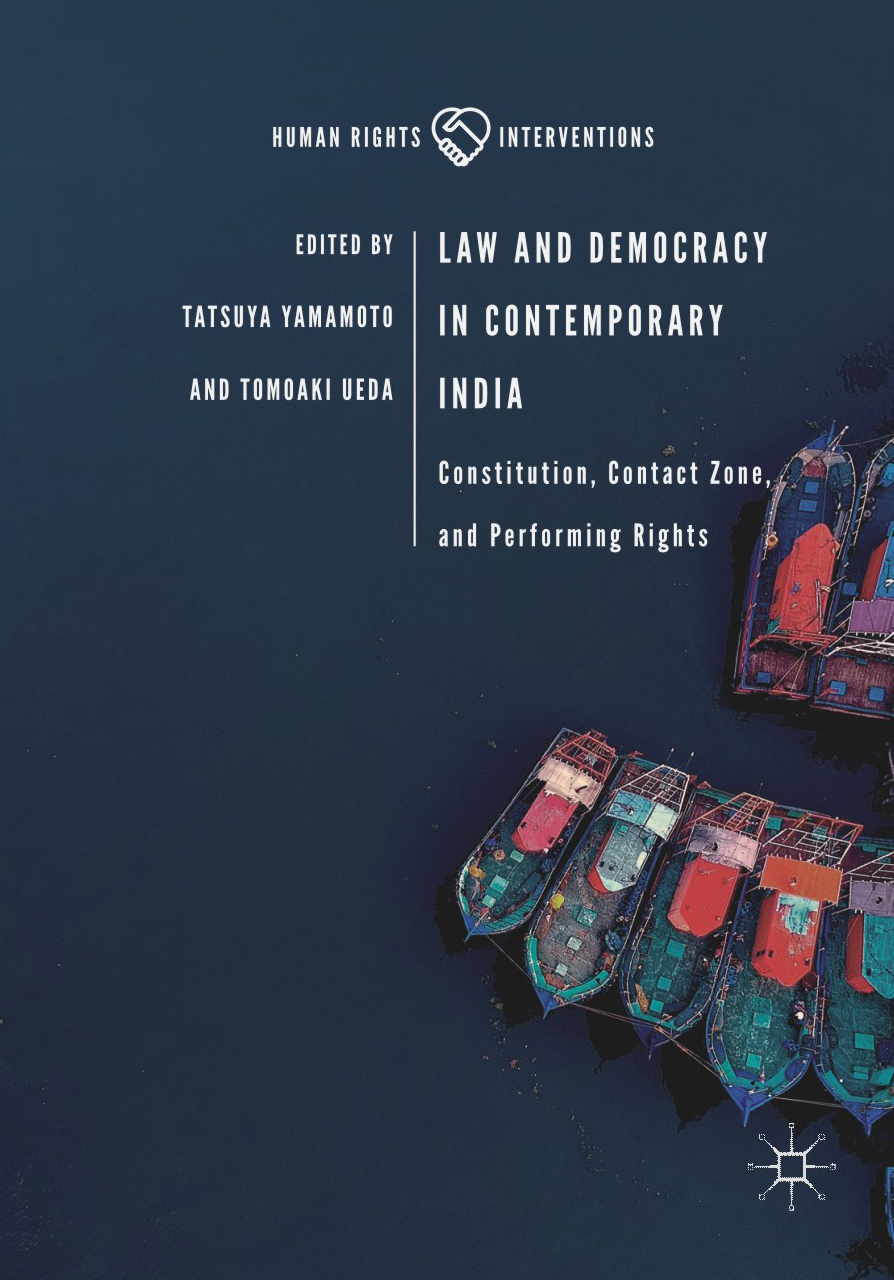
This book analyses legal orders, actors and democracy in contemporary India, with a particular focus on the everyday contexts and dynamics of human rights, citizenship and socio-economic rights and laws.
The contributions explore both ‘institutionalization from above’, where the judiciary and legislative body aim to govern people, and ‘institutionalization from below’, where the governed attempt to expand their substantive rights embedded within their everyday lives. This analysis identifies contact zones between the two directions, which act as spaces for democratic participation and negotiation. Such a perspective should be useful to both those who are interested in Indian politics, and anthropologists and sociologists working on dynamics of laws and rights.
Contents
1. Introduction / Tatsuya Yamamoto
2. Inventing Rights in the Indian Context / Kazuhiro Itakura
3. Who Appoints Judges? Judicial Independence and Democratisation of the Judiciary in India / Tomoaki Ueda
4. Citizenship In-between: A Case Study of Tibetan Refugees in India / Tatsuya Yamamoto
5. Rethinking the Reservation System in Contemporary India: A Local Point of View / Kenta Funahashi
6. ‘The Right to Know Is the Right to Live’: The Right to Information Movement in India / Shinya Ishizaka
7. Protesting the AFSPA in the Indian Periphery: The Anti-Militarization Movement in Northeast India / Makiko Kimura
8. Justice and Human Rights at the Grassroots Level: Judicial Empowerment in Dalit Activism / Maya Suzuki
9. The Right to Sacredness: Politics Surrounding Wind Power Development in the Thar Desert / Kodai Konishi
About the Author / Editor
Tatsuya Yamamoto is Associate Professor at Shizuoka
University, Japan. His research focuses on issues concerning
citizenship among Tibetan youth and their identification through Tibetan
music and dance.
Tomoaki Ueda is Associate Professor at Toyo
University, Japan. He studies nationalist movements in colonial India
and party politics in contemporary India.