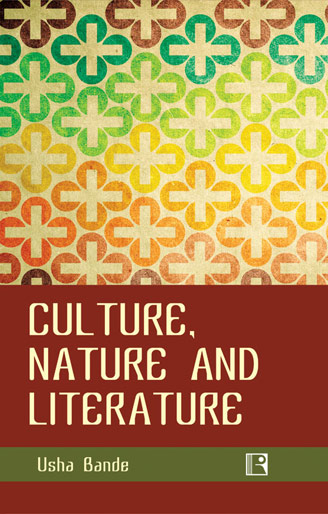
About the Book
This book is a collection of papers written for and read at various seminars and conferences over the years. That explains the range of topics and themes from culture to ecology, from mythology to feminism and from terrorism to human rights. The essays also represent a variety of critical positions and constitute a re-examination of some of the central issues in Indian literature. The defining feature of Indian writing is the quest to specify a space of cultural identity outside the hegemony. Thus, the need to preserve and project a distinct cultural identity has always been accompanied by the simultaneous incorporation or rejection of a colonizing alterity.
Most of the papers contained in the volume, therefore, attempt to look at and understand culture from various angles. The purpose here is twofold: to make available researchers some new strands to critically view Indian writing and to analyse specific issues concentrating on textual and historical evidence. Many of the papers are linked by an interest in gender issues, although few address feminism directly. A few others offer a commentary on aspects of life across postmodern landscape but do not address postmodern theory as such. Those that have their origin in colonial and postcolonial situations do not dwell on the positive or negative attributes of that period. The book thus deals with culture, literature and nature to examine the central sites of their representation. The works explored here are not homogenous in that they belong to different sections of contemporary Indian society but this pluralism is indicative of the basic nature of literary criticism.
Contents
1. Introduction
2. Of Parrots and Mynahs
3. Re-mapping Culture through Literature
4. Tagore’s Chitra and Folklore’s Hidimba
5. Humour as Resistance
6. The Con(Textual) Contours
7. The Primordial and the Modern
8. Gauri – Myth and Reality
9. Culture, Literature and Human Rights
10. Can We Exonerate Balram Halwai?
11. The Collapse of “Cultural Maps”
12. Re-visiting Ithaca and Re-casting Manali
13. Milk and Honey
14. Flight from Responsibility or Search for Freedom
15. Cactus Country
16. Gender, Education and Development
17. Human Values and Dr Radhakrishnan’s Concepts of Education
18. Rethinking Indian Culture with Dr Radhakrishnan
19. Gandhian Ideals and Nehruvian Vision
20. “The Contact Zone”
About the Author / Editor
Usha Bande, till recently Fellow, Indian Institute of Advanced Study, Shimla and also Visiting Professor at Vishwa Bharati University, Shanti Niketan (West Bengal), was on the faculty of English Literature in Government College for Women, Shimla and retired as Principal, Government College, Arki.
Dr Bande worked for her doctorate on the novels of Anita Desai, interpreting Desai’s characters from the angle of Third Force psychology. Hers is an innovative approach and has been widely acclaimed by US scholars in the field. She has numerous research papers and more than a dozen books to her credit. She completed a major UGC project on the Indian Short Stories in 1998, and has also worked in the field of Women’s Studies at the Indian Institute of Advanced Study, Shimla. She is also fond of journalistic and creative writing and is a regular contributor to The Tribune, Alive, Women’s Era, The Times of India, Indian Express and many other newspapers and magazines.