About the Book
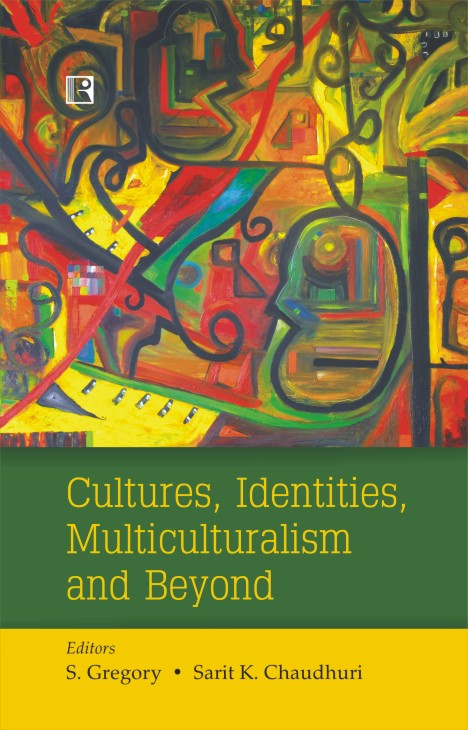
Even when the entire world has been increasingly shrinking into a global village, particularly since the start of the new millennium and the people of different cultures and races encountering each other by all means of channels and communications, the border lines of cultural identities seem to be assuming harder and rigid forms. In a world of multicultural contexts, international collaborations and multilateral political negotiations, the reality presents a paradox of sorts, raising newer challenges and requiring mutual understandings for the peaceful co-existence of human society. Such a situation demands a deeper knowledge about our cultural neighbours and a greater appreciation of the cultural specificities of each other.
The present volume is a small effort in this direction in capturing the cultural contours of different societies, and identifying the challenges of the contemporary and multicultural society for developing appropriate responses.
As reflected in the title of the volume, the papers presented here highlight and discuss the different dimensions and aspects of culture and cultural identities of both the indigenous and the mainstream societies, and also look into the issues of change and continuity, multiculturalism, adaptation, integration and beyond.
Almost all the papers are field-based, from different parts of India as well as from outside India, reflecting the ground realities.
It is hoped that this publication would definitely contribute in enriching the anthropological knowledge and perspective and its current relevance, in the service of humankind.
Contents
Part I: Indigeneity and Cultural Identities1. J.H. Hutton’s The Sema Nagas Revisited / G. Kanato Chophy
2. Cultural Homogeneity or Multiculturalism?: A Case Study among the Sakacheps of Jaintia Hills, Meghalaya / Teresa L. Khawzawl
3. Cultural Imperialism over Indigenous Culture: The Impact of Industrialization on the Oraons of Odisha / Minaketan Bag
Part II: Leadership and Political Identities4. Mao Naga Chieftainship: A Symbol of Ethnic Identity / A. Kapesa
5. Youth as Agents of Social Change: The Case of Nagas in a Nagaland Village / Abang Pertin
6. Negotiating Socio-Political Identity in Assam-Arunachal Borderlands: The Case of the Mising Community / Ratna Tayeng
7. Political System of the Thachanadan Moopan of Wayanad District, Kerala: Continuity and Change / Sajina Bharathan
Part III: Material Culture, Economy and Traditions8. Economy and Culture among the Kurichiyans of Wayanad in Kerala / Shakina T.
9. Longpi Ham: The Changing Tradition of Pottery among the Tangkhul Nagas of Manipur / Khachungla Tangvah
10. The Changing Motifs and Vocabularies in Meitei Textiles of Manipur / Oinam Hemlata Devi
11. Fishing Techniques of the Galo Tribe: An Ethno-Archaeological Perspective / Bina Gandhi Deori
12. The Living Nature of Burial Stones: A Study on the Jaintia Megalithic Tradition of Meghalaya / Akoijam Milan Meitei and Q. Marak
Part IV: Food Ways and Cultural Meanings13. Celebrating Zupi: Traditional Usage and Cultural Meanings in Rice Beer Consumption among Vaipheis in Manipur / Doisiammoi Vaiphei and Q. Marak
14. Cultural Meanings of Bamboo Shoot among the Lotha Nagas of Nagaland / Chumchano R. Humtsoe
Part V: Health Cultures, Beliefs and Practices15. Medical Beliefs and Practices of Chakpa Lois in a Meitei Village of Manipur / Asheibam Sandhyarani
16. Health Practices among the Bhoi Khasis of Umden, Ri-Bhoi District, Meghalaya / Ananya Chetia
17. Nutritional Status and Blood Pressure: A Study among Deuri Women of Bardeuri Village, Assam / Chandana Sarmah
Part VI: Mainstream Cultures and Cultural Integration18. Territorial Boundaries of Caste: An Ethno-Historical Perspective on Kongu Nadu / Ponnarasu S.
19. Rituals, Festivals and Social Network in Kaveri Basin Area of Karnataka / S. Mahadeva
20. Two Broadminded Men: Narratives of Identification through Marriage and Materiality / Thomas Herzmark
21. Salad Bowl of Cultural Integration, and Not Homogenization: A Case Study of Singapore’s Multiculturalism / Elvin Xing and Amy Phua Mei Yen
Part VII: Mainstream Cultures and Cultural Integration22. Bengalis of Nagpur: The Changing Context in the Era of Globalization / Surajit Kumar Pal
23. Religious Continuity and Change among the Migrant Maithil Brahmins of Bihar in Delhi / Anu Bhawana
24. The Future of Gorkha Ethnicity in India: An Anthropological Note / Swatahsiddha Sarkar
About the Author / Editor
S. Gregory, Professor and former Head, Department of Anthropology, and former Campus Director of Kannur University Thalassery Campus, is currently the Director of the School of Distance Education, and the Dean of the Faculty of Social Sciences, Kannur University. He earlier served as Director, RUSA; Chairman, Board of Studies in Anthropology; and Member in the Statutory Finance Committee and in the Academic Council. He was a Fulbright-Nehru Visiting Scholar at the University of Chicago during 2011–12. He has over sixty published research articles and several books to his credit. His areas of research interests include sustainable development, livelihood and social change, participatory research, decentralized planning, development of weaker sections, tribal development, health culture and migration studies.
Sarit K. Chaudhuri is a Professor of Anthropology and currently working as the Director, National Museum of Mankind (IGRMS), Bhopal. During 2003–05, as a postdoctoral fellow of SOAS, UK, he worked in a five years collaborative project of SOAS, British Museum, CCRD, and Rajiv Gandhi University, Arunachal Pradesh. He also worked with Anthropological Survey of India, Shillong and Rajiv Gandhi University, Arunachal Pradesh in the Department of Anthropology and AITS. He has published 13 books and 52 research papers. Currently, he is the editor of Humankind, an annual journal of IGRMS. He is also the member of the ‘Think Tank’ formed by the Ministry of Culture, Government of India.